The collection.
20 species. Fresh water, salt water, and the places in between.
Begin with a name, or see what catches your eye.
20 species in the archive
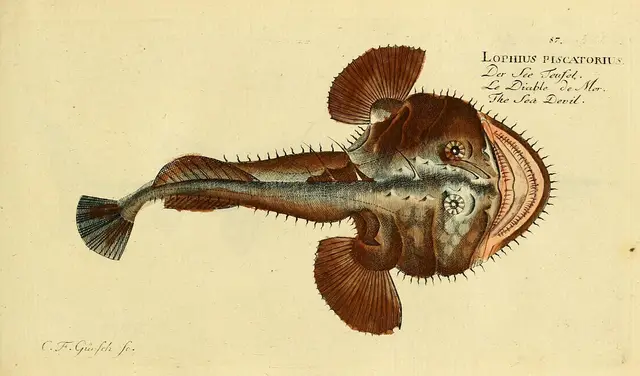
Anglerfish
LCLophius piscatorius
Mostly mouth. It waits on the seabed and fishes, quite literally, with a rod growing out of its head.
Marine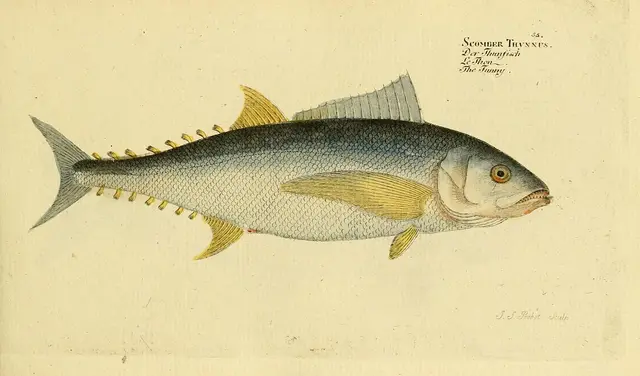
Atlantic bluefin tuna
LCThunnus thynnus
One of the largest bony fish alive, and a warm-muscled long-distance swimmer that crosses the Atlantic.
Marine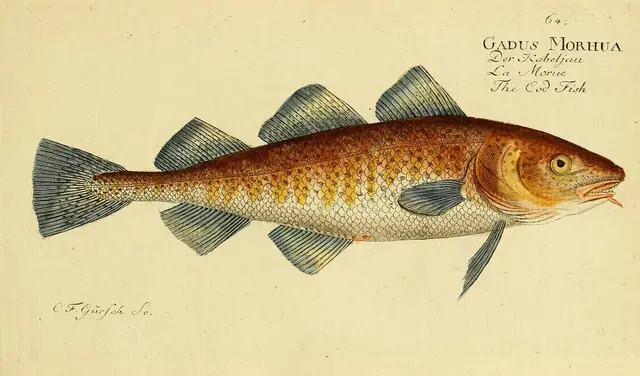
Atlantic cod
VUGadus morhua
For centuries cod fed whole coastlines, and then the coastlines nearly fished it out.
Marine / Brackish
Atlantic herring
LCClupea harengus
A schooling fish of the North Atlantic, and one of the most important fish in European economic and kitchen history.
Marine / Brackish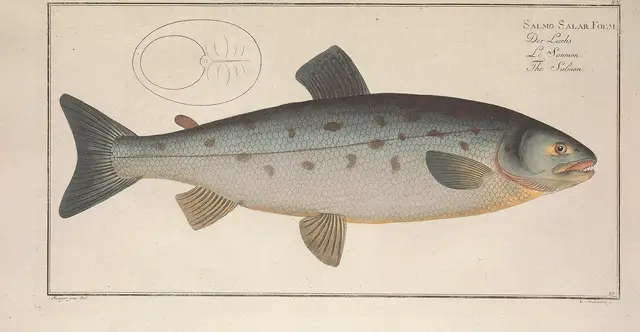
Atlantic salmon
NTSalmo salar
The archetypal migrant: it grows up at sea and returns to its home river to spawn.
Freshwater / Brackish / Marine
Brown trout
LCSalmo trutta
One species, several lives: the stream-dwelling brown trout, the lake trout and the sea-going sea trout.
Freshwater / Brackish / Marine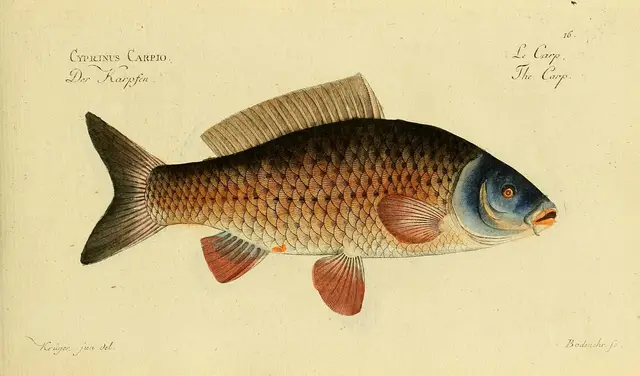
Common carp
LCCyprinus carpio
One of the oldest farmed fish in the world. Wild river populations live alongside domesticated forms introduced around the globe.
Freshwater / Brackish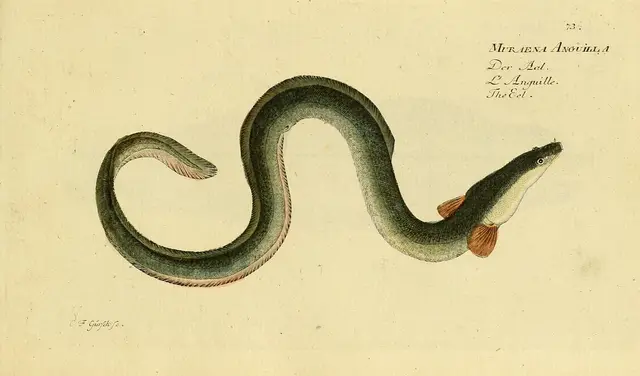
European eel
CRAnguilla anguilla
Its life cycle is one of the great unsolved puzzles of natural history, and the species is now critically endangered.
Freshwater / Brackish / Marine
European perch
LCPerca fluviatilis
Probably the first fish many European children ever catch, recognisable by its dark bars and spiny back.
Freshwater / Brackish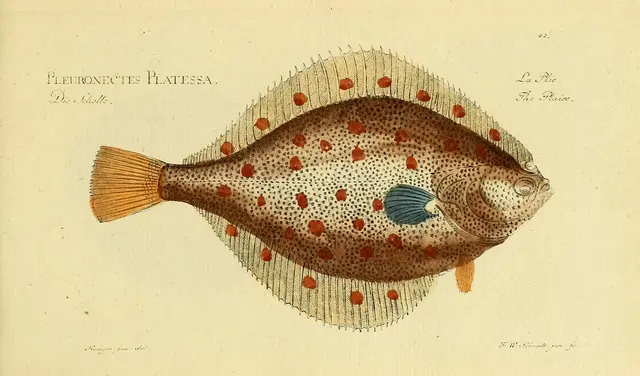
European plaice
LCPleuronectes platessa
A flatfish that starts life the right way up and then, slowly, moves one of its eyes.
Marine / Brackish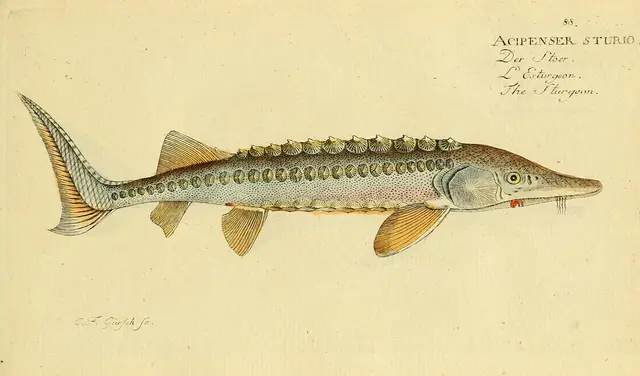
European sea sturgeon
CRAcipenser sturio
Once common enough to be an everyday food on the Elbe and the Rhine, now one of the rarest fish in Europe.
Freshwater / Brackish / Marine
Great white shark
VUCarcharodon carcharias
The largest predatory fish alive, and much less interested in people than its reputation suggests.
Marine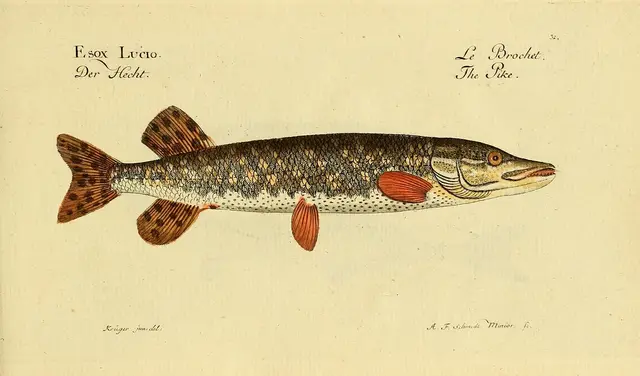
Northern pike
LCEsox lucius
An ambush predator of weedy lakes and slow rivers, built almost entirely for one thing: the sudden lunge.
Freshwater / Brackish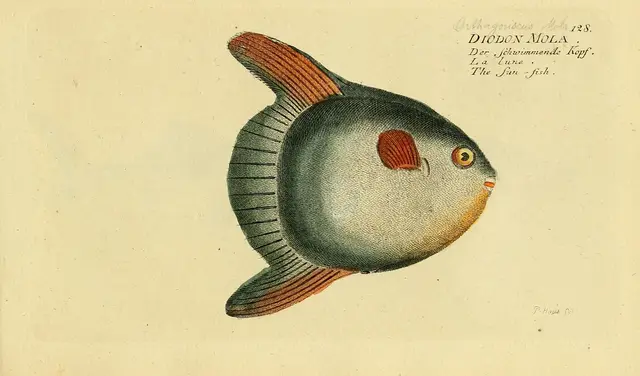
Ocean sunfish
VUMola mola
A fish that looks as if the back half was never finished.
Marine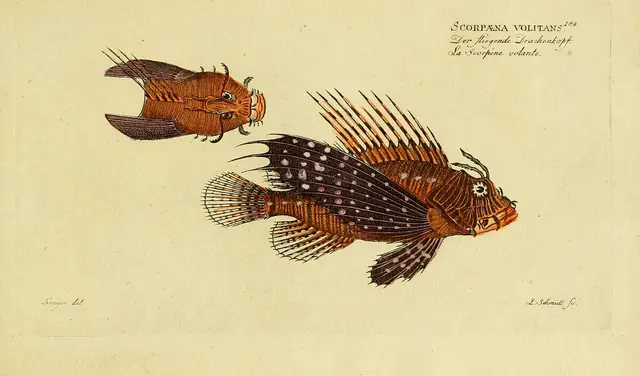
Red lionfish
LCPterois volitans
A striped, slow-moving reef fish with venomous spines, and one of the most damaging invasive marine fish anywhere.
Marine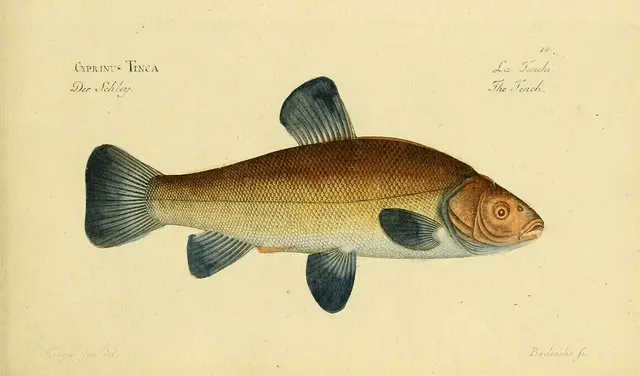
Tench
LCTinca tinca
A slow, olive-gold fish of warm, weedy ponds that seems to be made mostly of slime.
Freshwater / Brackish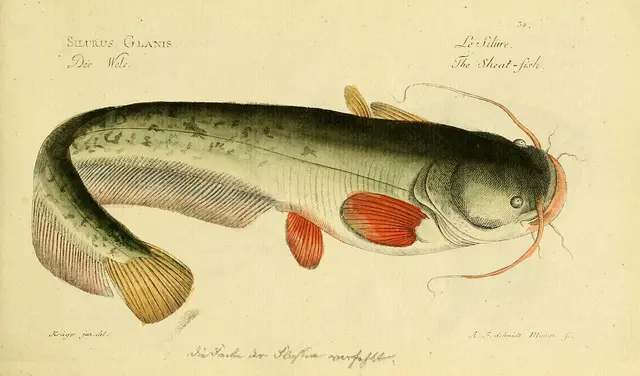
Wels catfish
LCSilurus glanis
The largest native freshwater fish of central Europe: broad-headed, scaleless and mostly nocturnal.
Freshwater / Brackish
West Indian Ocean coelacanth
CRLatimeria chalumnae
Known only from fossils and assumed extinct since the Cretaceous, until a live one was landed in South Africa in 1938.
Marine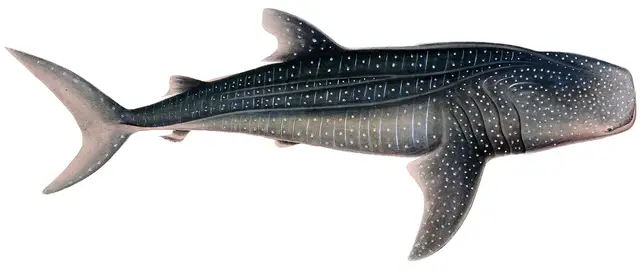
Whale shark
ENRhincodon typus
The largest living fish, and it eats plankton.
Marine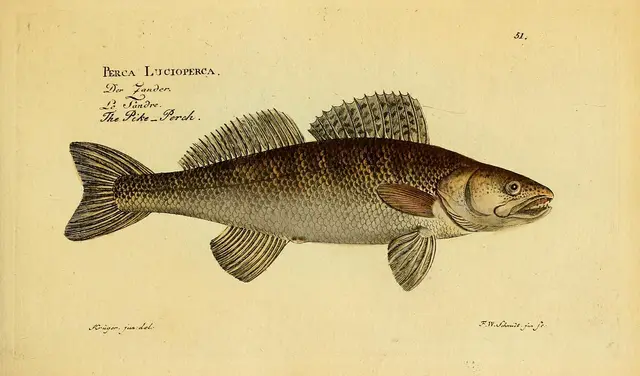
Zander
LCSander lucioperca
A pale, glassy-eyed predator that does its best work in murky water and at dusk.
Freshwater / Brackish