Zander.
Sander lucioperca(Linnaeus, 1758)
A pale, glassy-eyed predator that does its best work in murky water and at dusk.
LCLeast Concern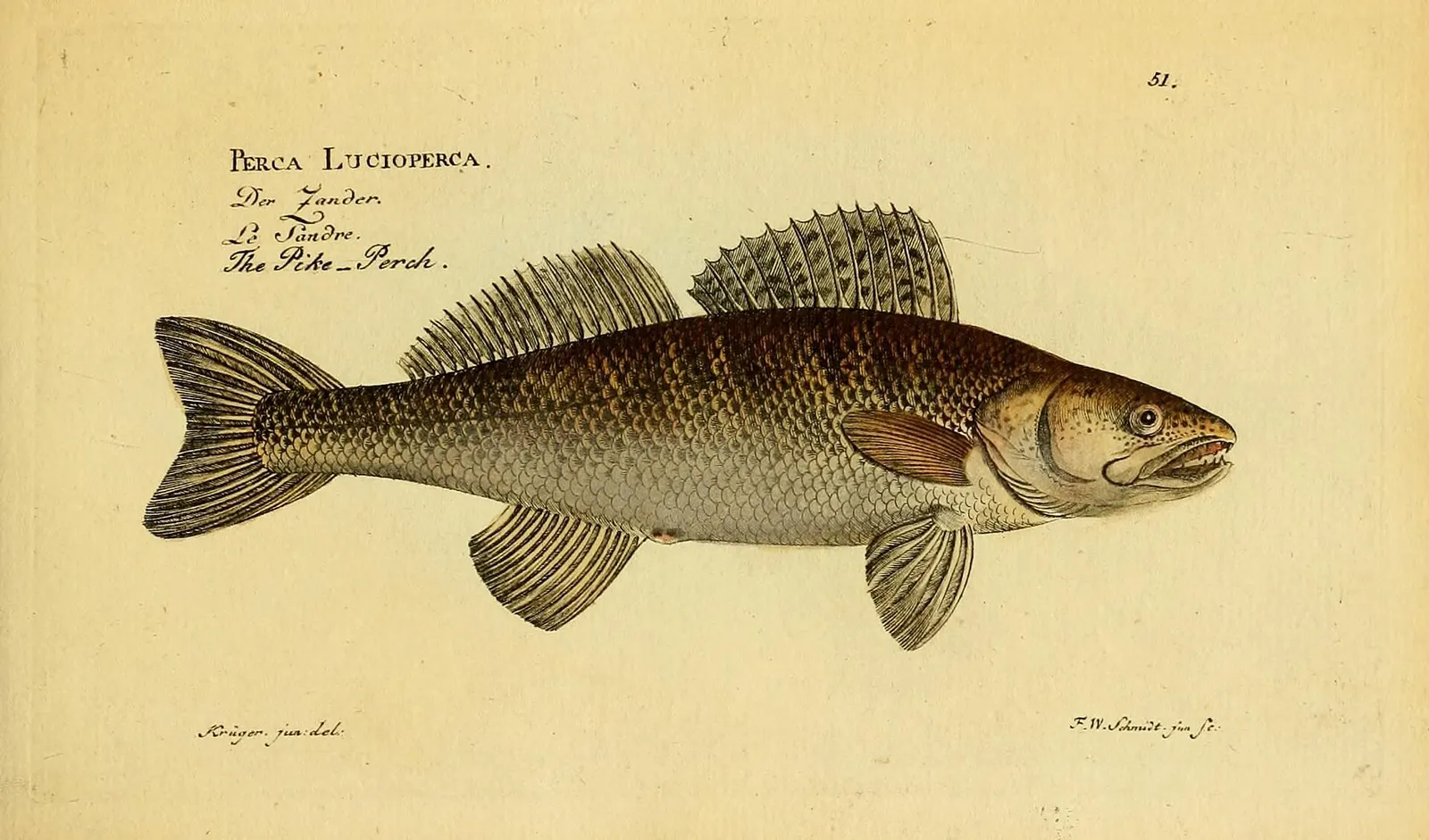
Where to find it.
Central and eastern Europe to western Asia, including the Caspian and Aral basins; widely introduced in western Europe.
Also known as Pikeperch.
A closer look.
Slender, perch-like body with two separate dorsal fins, the first spiny. Greyish-green back, dark saddle bars and a few prominent fang-like teeth among smaller ones. The large eyes have a reflective layer that gives them their glassy shine.
How it lives.
That reflective layer behind the retina makes zander well suited to low light. They hunt in turbid rivers and lakes, mostly at twilight and at night, often in loose groups.
The next generation.
In spring the male clears a nest on hard ground or among roots, and guards and fans the eggs until they hatch.
Conservation
Not threatened. Introductions into new waters have changed local fish communities.
Least Concern — global IUCN assessment dated 27 May 2022. Regional populations can have a different status. View the Red List record ↗
In the margins.
- Despite the name “pikeperch”, it is a true perch and no relation of the pike.
- Bloch labelled the plate “Perca lucioperca”, the name the species carried before it was moved to the genus Sander.
FishBase — Sander lucioperca ↗
IUCN Red List — assessment ↗
M. E. Bloch, Ichthyologie, ou Histoire naturelle des poissons, pl. 51. Public domain ↗. Reproduced as resized WebP files.
Keep looking.
Next: Common carp ↗
European perch
LCPerca fluviatilis
Probably the first fish many European children ever catch, recognisable by its dark bars and spiny back.
Freshwater / Brackish
Northern pike
LCEsox lucius
An ambush predator of weedy lakes and slow rivers, built almost entirely for one thing: the sudden lunge.
Freshwater / Brackish
Common carp
LCCyprinus carpio
One of the oldest farmed fish in the world. Wild river populations live alongside domesticated forms introduced around the globe.
Freshwater / Brackish