Ocean sunfish.
Mola mola(Linnaeus, 1758)
A fish that looks as if the back half was never finished.
VUVulnerable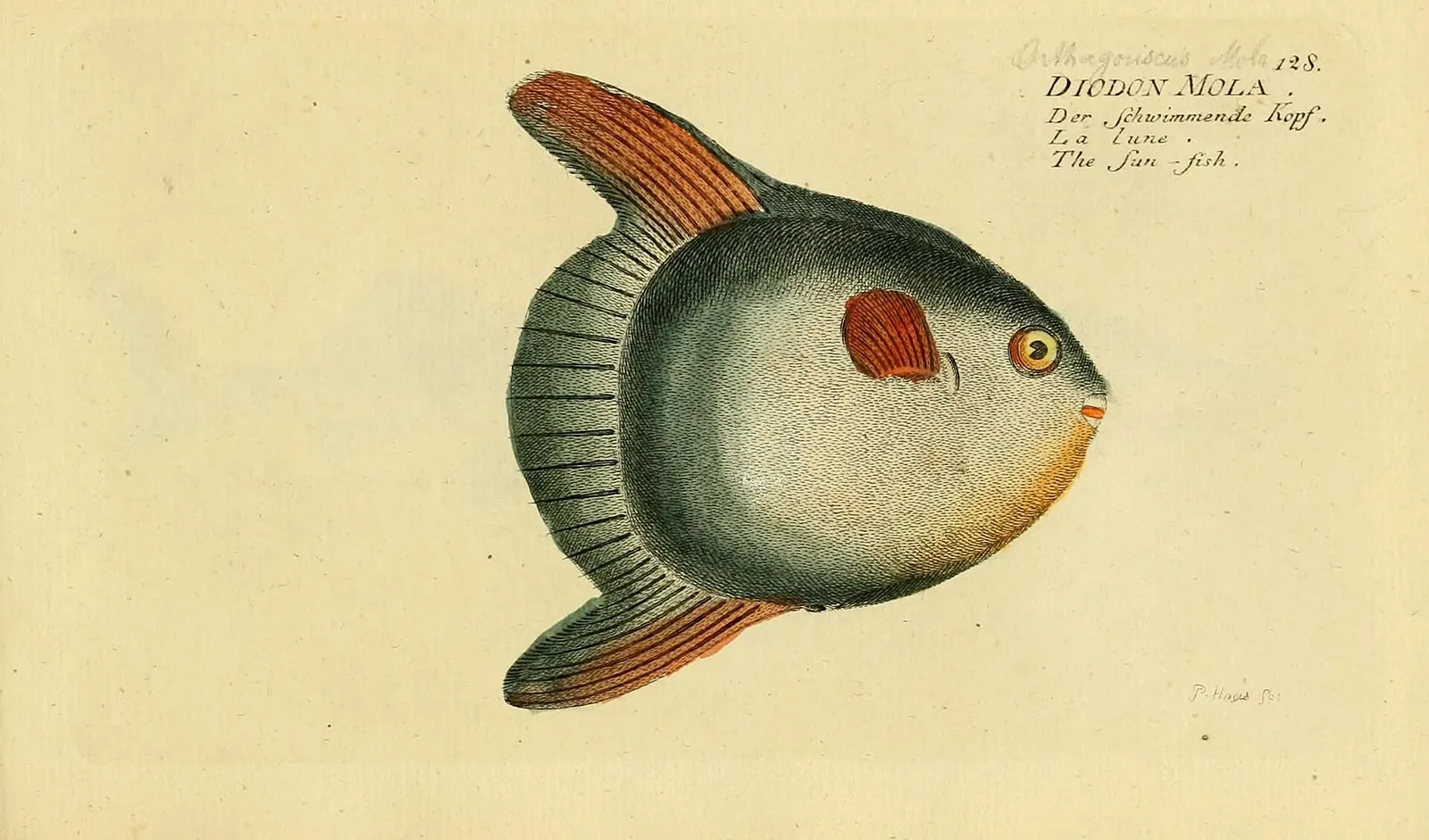
Where to find it.
Temperate and tropical oceans worldwide.
Also known as Mola, Common mola.
A closer look.
A tall, disc-shaped body with no true tail. Instead, the dorsal and anal fins merge into a rudder-like flap called the clavus. The skin is thick and rough, without scales, and the mouth is small with fused, beak-like teeth.
How it lives.
Sunfish dive deep to feed and then lie flat at the surface, apparently to warm up again, which is where the name comes from. Seabirds and small fish pick parasites off their skin.
The next generation.
One female was found to carry an estimated 300 million eggs, more than any other known vertebrate.
Conservation
Listed as Vulnerable, mainly because of high bycatch in driftnets and longlines.
Vulnerable — global IUCN assessment dated 7 June 2011. Regional populations can have a different status. View the Red List record ↗
In the margins.
- The heaviest bony fish ever recorded was a closely related species, Mola alexandrini: about 2,744 kg, found off the Azores in 2021.
- Bloch filed it under “Diodon mola”, together with the porcupinefish.
FishBase — Mola mola ↗
IUCN Red List — assessment ↗
M. E. Bloch, Ichthyologie, ou Histoire naturelle des poissons, pl. 128. Public domain ↗. Reproduced as resized WebP files.
Keep looking.
Next: Red lionfish ↗
Brown trout
LCSalmo trutta
One species, several lives: the stream-dwelling brown trout, the lake trout and the sea-going sea trout.
Freshwater / Brackish / Marine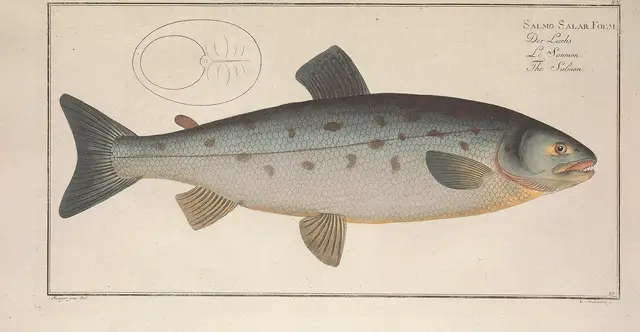
Atlantic salmon
NTSalmo salar
The archetypal migrant: it grows up at sea and returns to its home river to spawn.
Freshwater / Brackish / Marine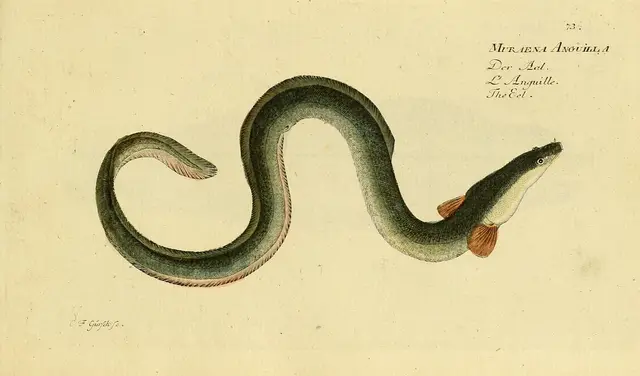
European eel
CRAnguilla anguilla
Its life cycle is one of the great unsolved puzzles of natural history, and the species is now critically endangered.
Freshwater / Brackish / Marine