Common carp.
Cyprinus carpioLinnaeus, 1758
One of the oldest farmed fish in the world. Wild river populations live alongside domesticated forms introduced around the globe.
LCLeast Concern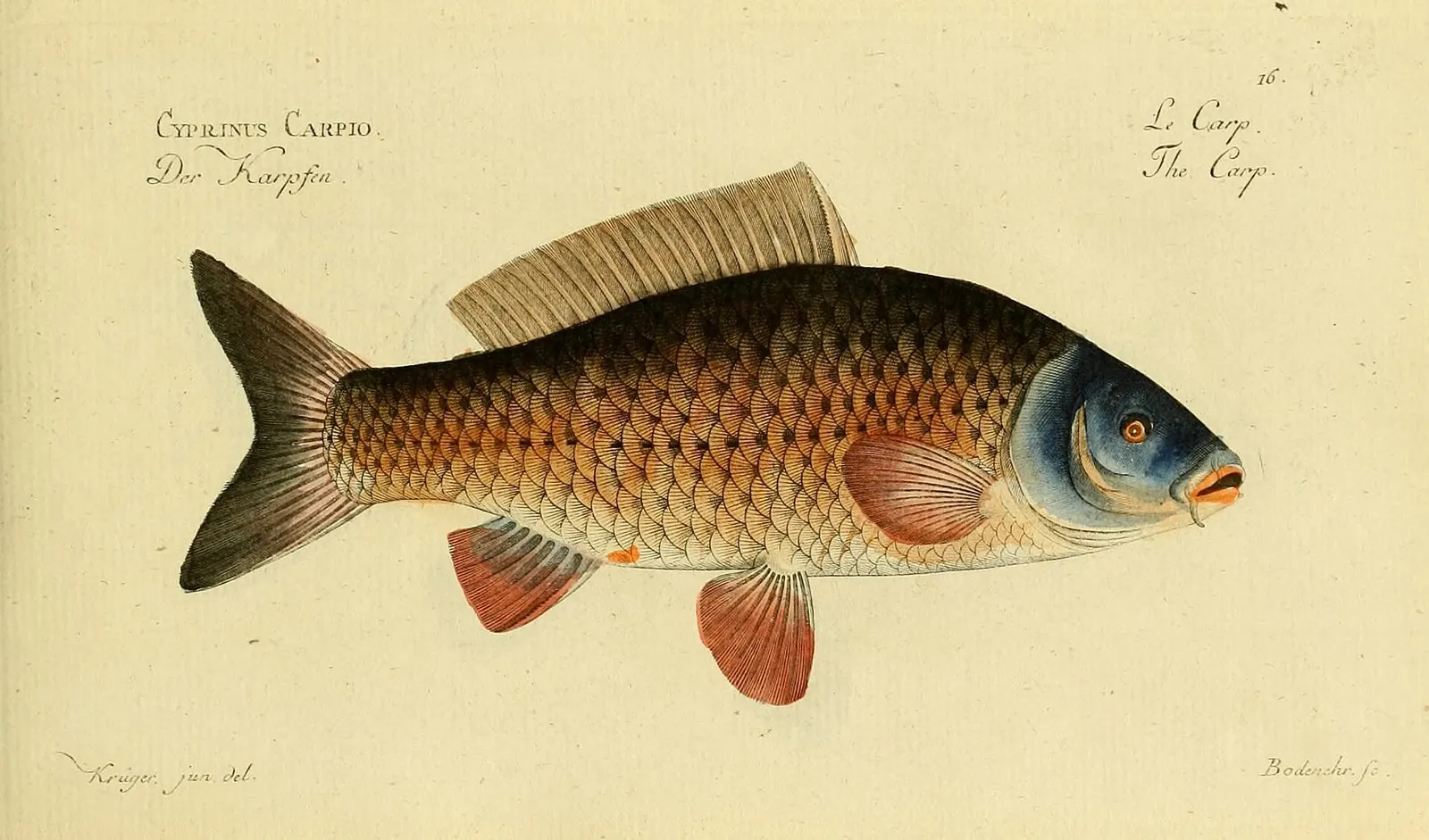
Where to find it.
Native to the Black, Caspian and Aral Sea basins, including the Danube. Introduced populations and domesticated forms are now found almost worldwide.
Also known as Carp, Wild carp.
A closer look.
Four barbels around the mouth. There are no teeth in the jaws; food is ground by pharyngeal teeth in the throat. Breeding produced several scale patterns: fully scaled, mirror, line and the nearly scaleless leather carp.
How it lives.
Carp prefer warm, nutrient-rich, slow or still water with a soft bottom. They root through the sediment for food, clouding the water, which is one reason they cause trouble outside their native range.
The next generation.
Spawns in late spring and early summer once the water reaches about 18 °C. The sticky eggs cling to plants in the shallows.
Conservation
The global IUCN assessment dated June 2022 lists the species as Least Concern. Native wild populations still face river engineering and interbreeding with domesticated stock. Outside its native range, introduced carp can severely alter aquatic habitats.
Least Concern — global IUCN assessment dated 9 June 2022. Regional populations can have a different status. View the Red List record ↗
In the margins.
- In medieval central Europe, carp ponds were spread largely by monasteries.
- Carp disturb bottom sediment as they feed, increasing turbidity in shallow waters.
- The species is on the IUCN list of the “100 of the World’s Worst Invasive Alien Species”.
FishBase — Cyprinus carpio ↗
IUCN Red List — assessment ↗
M. E. Bloch, Ichthyologie, ou Histoire naturelle des poissons, pl. 16. Public domain ↗. Reproduced as resized WebP files.
Keep looking.
Next: Tench ↗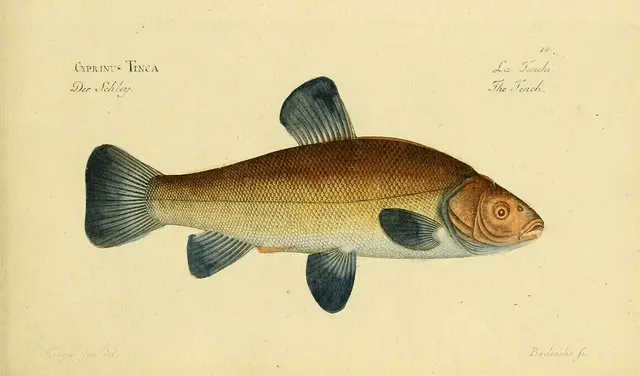
Tench
LCTinca tinca
A slow, olive-gold fish of warm, weedy ponds that seems to be made mostly of slime.
Freshwater / Brackish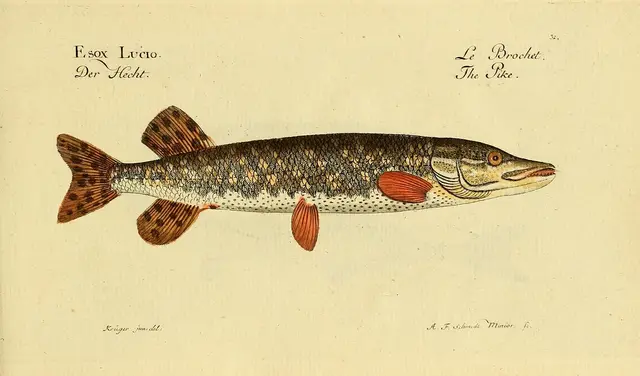
Northern pike
LCEsox lucius
An ambush predator of weedy lakes and slow rivers, built almost entirely for one thing: the sudden lunge.
Freshwater / Brackish
European perch
LCPerca fluviatilis
Probably the first fish many European children ever catch, recognisable by its dark bars and spiny back.
Freshwater / Brackish